


Navigate back to home screen
SVG image of tape
Spotify card
Navigate to Listening Parties contentNavigate to Merch content
Listening Parties introduction
I co-created Listening Parties (LPs), with music playback, live interaction and chat, streaming to the main app, and an artist store, to enable artists to communicate and earn revenue with thousands of fans at once. I accomplished this in under 6 months to enable artists to connect with their fans, earn thousands of dollars, and create new streams of revenue for Spotify
Over 90 LPs conductedOver 20,000 fans hosted on the application95% satisfaction rate amongst attendees

Ran 90+ LPs, rewarding over 20,000 fans with an opportunity to interact with their favorite artists, with 95% satisfied, 60% actively engaged


125% average causal lift in streaming in the week following the LP444% average lift in song saves among attendees on the day of the event44% average causal lift in users listening to the artist in the week following the event

98% of artists registering a causal lift in streams in the week following the LP, with 125% avg. causal lift in streaming in the week following the LP and 444% avg. lift in song saves among attendees on the day of the event

Swipe left for more
The RSVP Room

The RSVP Room: The first phase of an LP, where attendees can see the LP offering and choose to RSVP to the event.
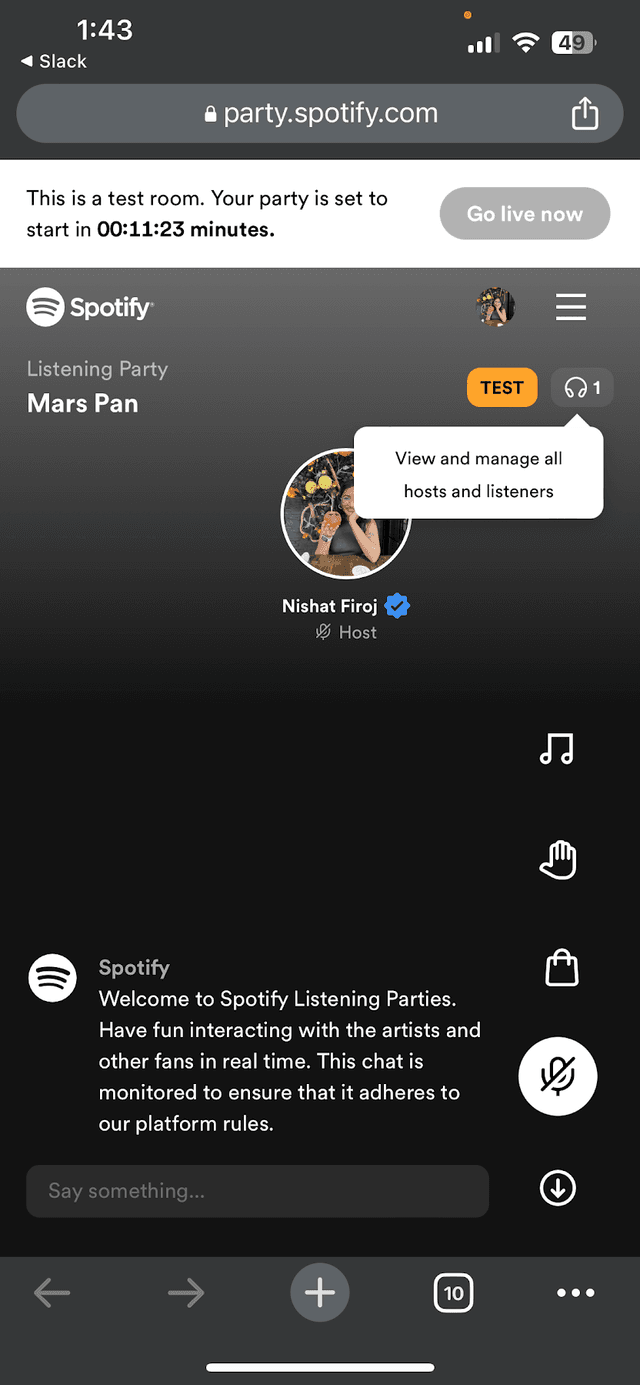
The Test Room

The Test Room: The second phase of an LP, from the perspective of an artist, where an artist and their team can test out their audio and music playback capabilities, before going live in an LP.

The Hype Room

The Hype Room: The second phase of an LP, from the perspective of a listener, where attendees can see the countdown till the LP starts. They can purchase from the artist store and follow the artist when in this phase of an LP.
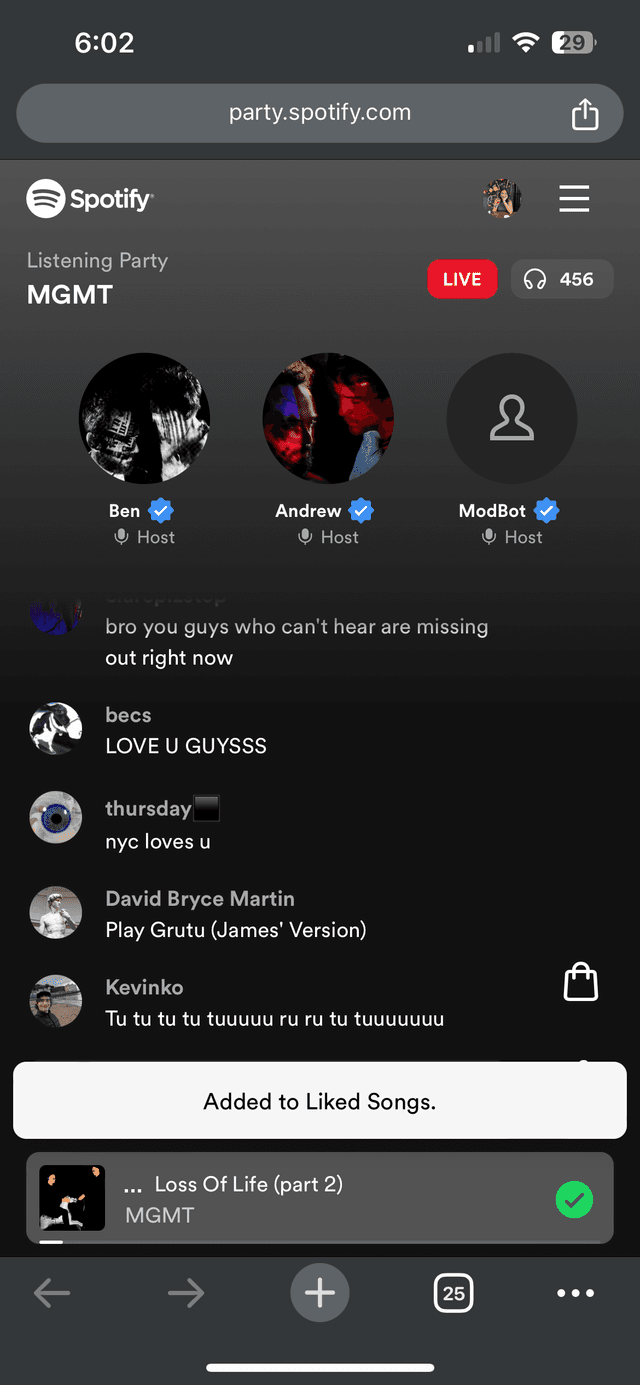
The Live Room

The Live Room: The third phase of an LP, where attendees can participate in a live chat, shop in the artist store, and listen to artists and request to speak with them. In this phase the attendee also gets to listen to music that the artist's team queues up.
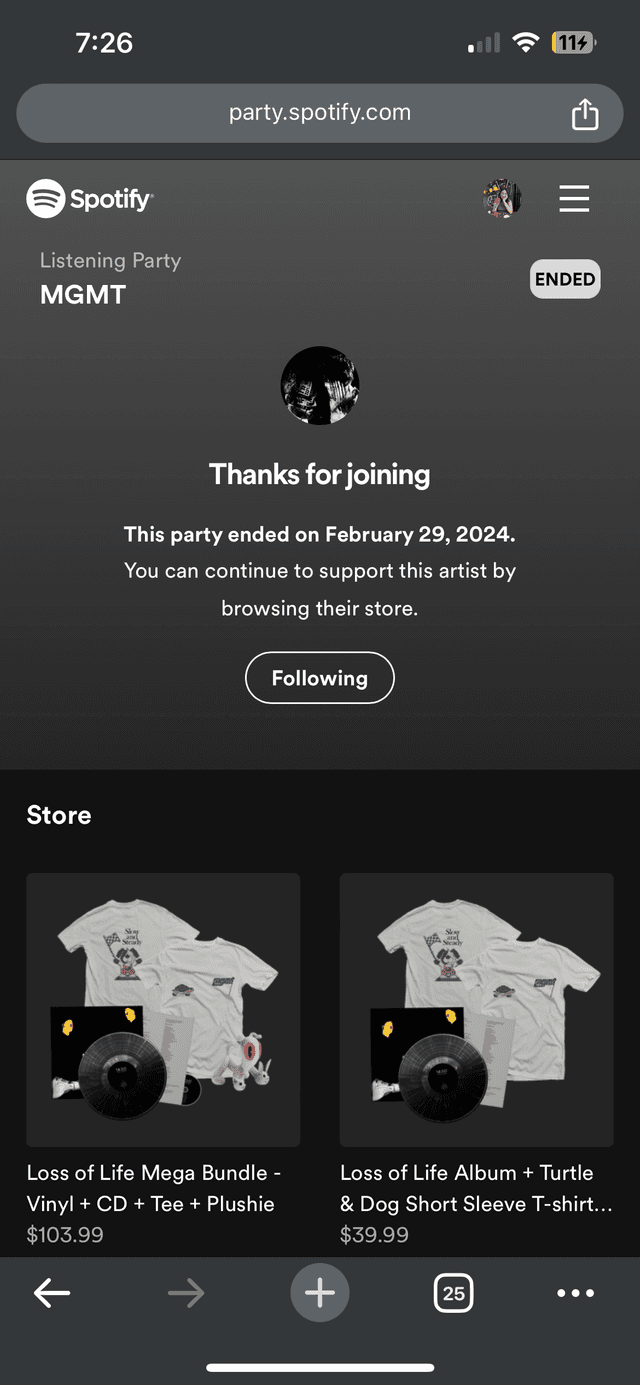
The Ended Room

The Ended Room: The fourth phase of an LP, where attendees see a thank you note, buy from the artist shop, and follow the artist.


Tech stack for LPs
Tech stack for LPs
An LP is a single page Next.js app, utilizing React and Typescript technologies, with life cycle stages including the RSVP phase, Hype phase, Test phase, Live phase, and Ended phase.
LPs manage data by having clients send HTTP requests to a data layer, which then orchestrates all data points to relevant backend micro services. All events are then disseminated to all attendees over a WebSocket connection, where the client synchronizes all streamed content via client level state management system.
Client state management was built in house, using custom reducers, hooks, and providers, to synchronize streamed Spotify playback and audio.
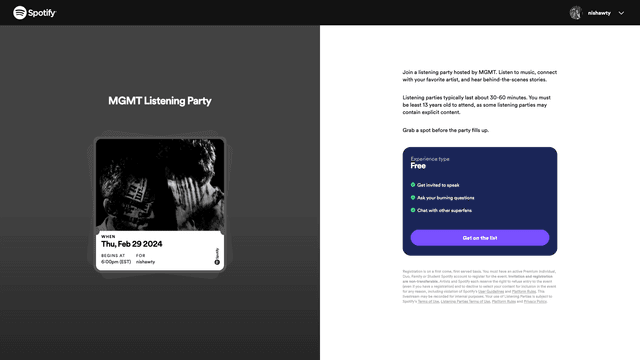
Desktop layout of LP event

The RSVP Room: The first phase of an LP, where attendees can see the LP offering and choose to RSVP to the event.

Desktop layout of LP event

The Hype Room: The second phase of an LP, from the perspective of a Listener, where attendees can see the countdown till the LP starts. They can purchase from the artist store and follow the artist when in this phase of an LP.

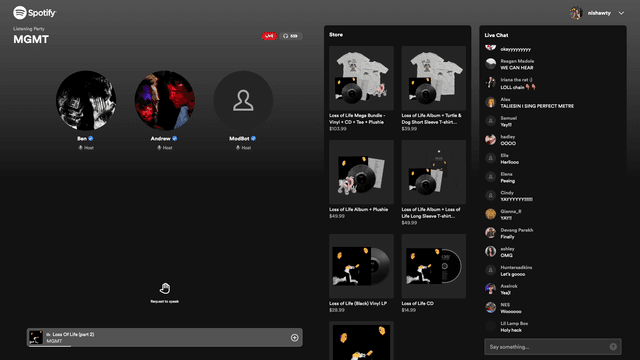
Desktop layout of LP event

The Live Room: The third phase of an LP, where attendees can participate in a live chat, shop in the artist store, and listen to artists and request to speak with them. In this phase the attendee also gets to listen to music that the artist's team queues up.

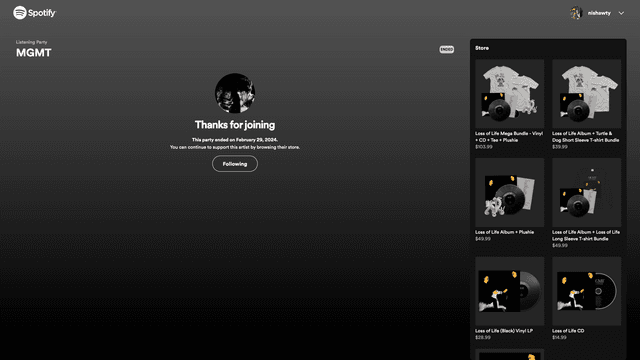
Desktop layout of LP event

The Ended Room: The fourth phase of an LP, where attendees see a thank you note, buy from the artist shop, and follow the artist.

My leadership role in implementing LPs
One of my key achievements was the planning, design, and implementation of a data orchestration layer, that enabled users to make purchases directly from their favorite artists. TL;DR, my plan involved horizontally slicing the architectural build, to meet tight deadlines and still effectively merge old and new backend services into one orchestration layer. In addition to improving the user experience, this helped Spotify see a notable rise in revenue and streams.
I led the demos and QA sessions for LPs, not only within the immediate team, but also for hundreds of other Spotifiers, engineering directors, and other Spotify leadership.
My testing and documentation work for LPs
These frontend and backend systems were all built using a tech principles document that I co-wrote, to guide all engineers towards building a well organized, robust, future-proof system of repositories.
The entire repository had over 100k lines of code and had 50% coverage in terms of unit tests, synthetic tests, and more.
I wrote documentation for all testing and QA procedures for LPs.
Merch introduction
Merch introduction
I oversaw the deployment and ongoing upkeep of Spotify's retail store, bringing about improvements that benefited millions of users on a site that brought in $40 million in income. My work included maintenance of the Shopify integration, UTM attribution mapping, user behavior instrumentation, and responsive styling.
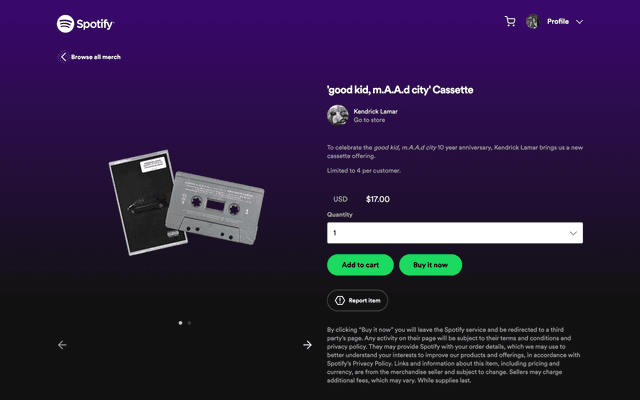
Desktop view of Spotify's online merch store

This is what a Spotify user will see upon navigating to this product page for Kendrick Lamar's 'good kid, m.A.A.d city' Cassette on the desktop shop.

Mobile view of Spotify's online merch store

This is what a Spotify user will see upon navigating to Kendrick Lamar's store on mobile.